Database Fundamentals

- Description
- Curriculum
- Reviews
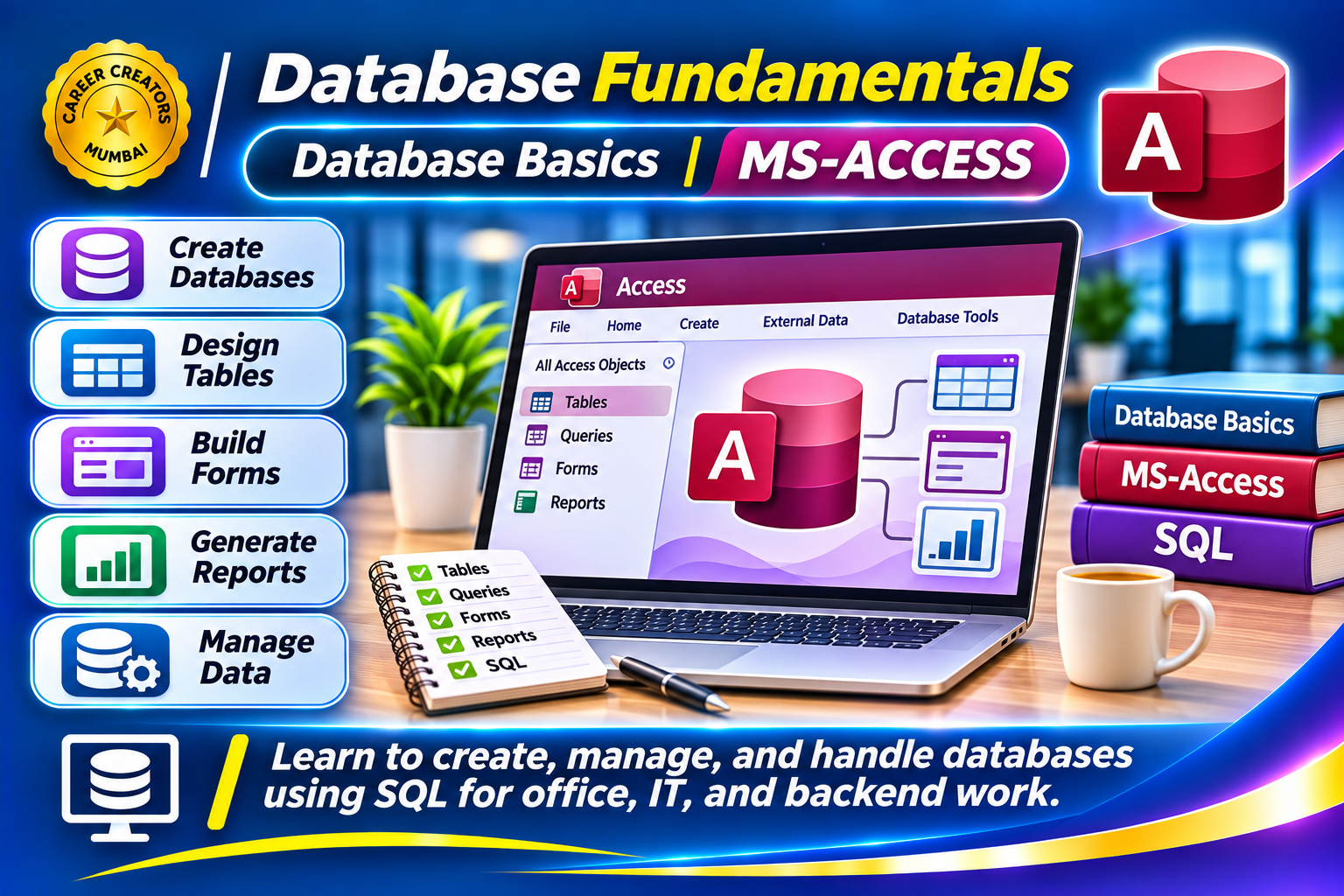
The Database Fundamentals course is designed to introduce students to database management concepts and help them understand how information is stored, organized, retrieved and maintained using database systems.
Databases are essential in modern businesses, offices, educational institutions and IT environments. Organizations use databases to manage customer information, employee records, inventory, financial transactions and other important business data.
This course introduces students to database fundamentals, Microsoft Access and SQL concepts, providing a foundation for managing structured information and developing basic database applications.
Course Modules
1. Introduction to Database Management
-
Understanding databases and DBMS.
-
Importance of database management.
-
Introduction to relational databases.
-
Understanding tables, records and fields.
-
Database applications in business and IT.
2. Database Structure & Design
-
Understanding tables and columns.
-
Data types and field properties.
-
Primary keys and foreign keys.
-
Database relationships.
-
Introduction to database normalization.
3. Microsoft Access
-
Introduction to Microsoft Access.
-
Creating and managing databases.
-
Creating tables and defining fields.
-
Setting primary keys.
-
Creating relationships between tables.
-
Entering and managing records.
4. SQL Fundamentals
-
Introduction to SQL.
-
Understanding SQL commands.
-
SELECT statements.
-
INSERT statements.
-
UPDATE statements.
-
DELETE statements.
-
Filtering and sorting records.
-
Basic database queries.
5. Database Management & Practical Applications
-
Managing database records.
-
Searching and retrieving information.
-
Organizing business data.
-
Understanding database security fundamentals.
-
Database backup and maintenance concepts.
6. Practical Database Projects
-
Student Information Database.
-
Employee Records Database.
-
Customer Management Database.
-
Product Information Database.
-
Library Management Database.
Learning Outcomes
By the end of this course, students will understand database fundamentals and gain practical experience in creating and managing databases using Microsoft Access and basic SQL.
They will develop the foundation required to progress towards advanced database management, SQL programming and business data management.
Course Category: Database Management & Information Systems
Software & Technologies Covered:
-
Microsoft Access
-
SQL Fundamentals
-
Relational Database Concepts
Skills You Will Develop:
-
Database creation
-
Table and field management
-
Primary and foreign keys
-
Database relationships
-
SQL queries
-
Data entry and retrieval
-
Database organization
Practical Projects:
-
Student Database
-
Employee Database
-
Customer Database
-
Product Database
-
Library Database
Suitable For: Beginners, students, office professionals, commerce students, aspiring database administrators and individuals interested in IT and data management.
Prerequisites: Basic computer knowledge. No previous database experience is required.